Feminism Polarity Collapse Archetypal Wound: Women vs Men
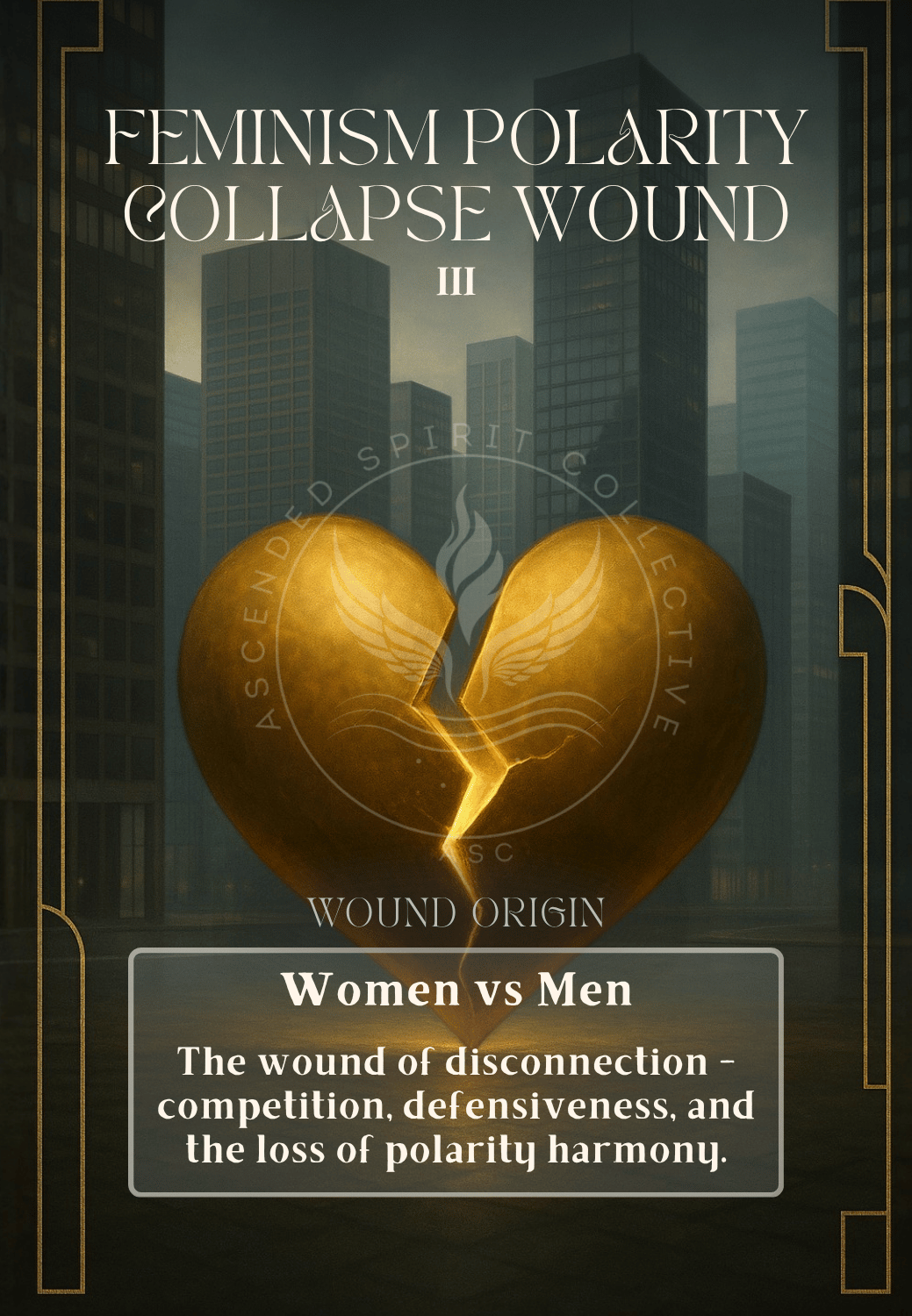
The Feminism Polarity Collapse Archetypal Wound: Women vs Men
The Inheritance That Turned Liberation Into Division
The Shadow Belief
“Needing someone means I am weak. Independence is the only safety. Vulnerability is a trap.”
There is a wound running through every modern relationship — a fracture so normalised that most people mistake it for personal failure. It shows up as the terror of softening. The confusion about roles. The exhaustion of carrying everything alone while insisting that you prefer it that way.
This is the Feminism Polarity Collapse Archetypal Wound. And if you have ever felt unsafe surrendering in partnership, confused about what healthy masculinity or femininity actually looks like, or secretly exhausted by your own hyper-independence — you are carrying it.
Where This Archetypal Wound Was Born
When the world shifted through technology, war, birth control, economic change, and social revolution, the ancient dance between masculine and feminine polarities fractured. The roles that once secured partnership began to dissolve. But the world did not replace these roles with new ones — it simply shamed the old and glorified independence at any cost.
One side of the polarity learned: do not need anyone, dependence is weak, take care of yourself. The other side learned: you are no longer necessary, your strength is dangerous, tone it down. What began as liberation slowly became division. The movement that was meant to free everyone instead created a new prison of isolation disguised as empowerment.
Your nervous system learned to equate closeness with danger, intimacy with loss of self, dependence with shame, leadership with oppression, vulnerability with weakness, and polarity with imbalance. This lives in the fear of relying on anyone, the defensiveness during conflict, the confusion about roles in relationship, the resentment that runs both ways, and the collapse into hyper-independence or passive withdrawal.
How This Archetypal Wound Manifests Today
This Archetypal Wound fractured the cultural story into two extremes. One side became self-sufficient but exhausted, carrying the emotional and logistical load alone while insisting they did not need help. The other became passive, apologetic, or aggressive, unsure of their place in a world that no longer seemed to want what they offered. Harmony collapsed.
You might recognise it in difficulty receiving support even when it is freely offered. Choosing partners you do not trust to lead. Feeling unsafe softening or opening. Shame around needing intimacy. Hyper-independence as self-protection. Confusion between empowerment and defensiveness. The belief that strength means never asking for help, and vulnerability means giving someone the weapon to destroy you.
This wound does not belong to one gender. It lives in anyone who has lost access to their full polarity — anyone who armours against vulnerability, anyone who confuses strength with isolation, anyone who secretly longs for partnership but is terrified of what it might cost them. It is the reason modern dating feels impossible, marriages feel like business arrangements, and genuine intimacy feels like a relic from another era.
The healing is not to return to outdated roles. It is to build new ones — rooted in sovereignty, trust, and the willingness to be both strong and soft. To remember that interdependence is not a regression but an evolution. That you can be whole on your own and still choose to be held. That the dance between masculine and feminine energy is not a war to be won but a harmony to be remembered.
The Sovereign Reframe
“Interdependence is not weakness — it is the highest expression of trust. I can be sovereign and connected.”
Journal Prompts for Integration
▸ Where have I confused independence with safety — and what would it feel like to let someone in without losing myself?
▸ What did I learn about needing someone — and whose voice told me that vulnerability was weakness?
▸ What becomes possible in my relationships when I stop performing strength and start practising trust?
Go Deeper With the Full Healing Toolkit
This article introduces the wound. The Archetypal Wounds Oracle Deck gives you the complete toolkit to heal it — including a personalised EFT Tapping Script, ACT Integration Process, Mirror Mantra, and guided Journal Prompts for every single archetype.
Get your deck at archetypalwounds.com
Support this work: ko-fi.com/fionaellis
Research Disclaimer: This article draws on cultural history, epigenetic research, and archetypal psychology. It is intended for education and self-reflection, not as a substitute for professional mental health support. The Archetypal Wounds Oracle Deck was created by Fiona Ellis and informed by AI-assisted research. If you are experiencing a mental health crisis, please contact a qualified professional.
© 2026 Fiona Ellis | archetypalintegration.com
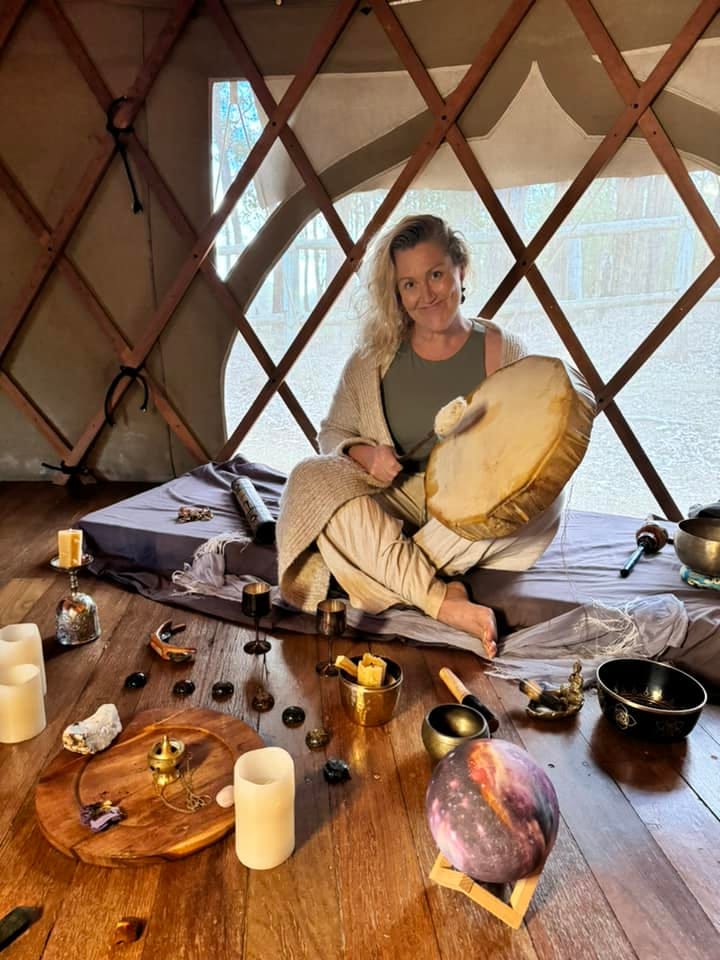
Fiona Ellis is the creator of the Archetypal Wounds Oracle Deck and founder of Archetypal Integration. A Master Trainer of Shamanic NLP with over 15 years of experience, she maps the inherited trauma patterns that shape our relationships, identity, and sense of worth — bridging archetypal psychology, cultural trauma theory, and somatic integration to help people heal what their lineage could not.
A 68-card oracle system mapping the inherited trauma patterns that shape your life, relationships, and sense of worth. Created by Fiona Ellis — Master Trainer of Shamanic NLP and founder of Archetypal Integration.
Every card in this deck maps a pattern passed down through your lineage — not as personal failure, but as generational inheritance. The healing starts when the wound is witnessed.
Get the Oracle Deck