The Hustling Heiress Archetypal Wound: Love or Money
The Hustling Heiress Archetypal Wound: Love or Money
The Inheritance That Said Success Made You Unlovable
The Shadow Belief
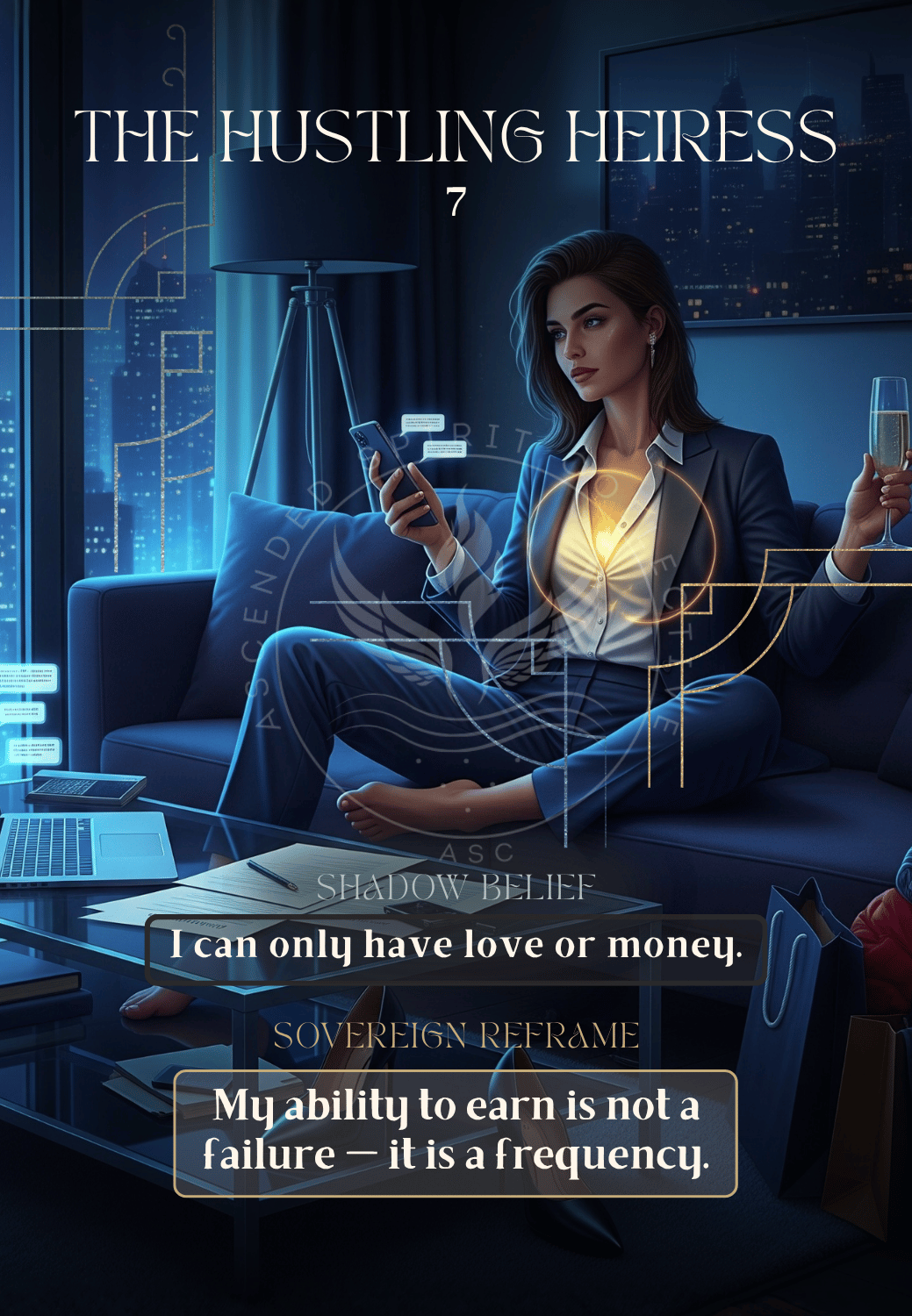
“I can only have love or money. My success makes me less worthy of being chosen. Being self-sufficient means I will never be held.”
There is a wound that sits at the intersection of ambition and intimacy. It tells you that you must choose: build your empire or be held by someone who loves you. That your success is a wall, not an invitation. That every step you take toward financial independence is a step away from being chosen.
This is The Hustling Heiress Archetypal Wound. And if you have ever downplayed your success to seem more approachable, dimmed your power to soothe someone else’s ego, or believed that earning your own way meant love would never arrive — you are carrying it.
Where This Archetypal Wound Was Born
Before the separation, contribution and belonging coexisted without conflict. Every individual brought their gifts — including material abundance — and this was celebrated as strengthening the whole. There was no contradiction between creating value and receiving love.
The Victorian Era drove a wedge between provision and partnership. Those who were provided for were considered respectable. Those who worked outside the home were marked as having failed — either they had failed to find a partner, or their partner had failed to provide. Earning was coded as a mark of shame, not sovereignty.
The Industrial era locked this further by making all human value productive or useful to the machine — but the cultural story said that those in partnership should not need to work, and those who worked had obviously not been chosen. This created an impossible bind: you were worthless without output, yet your output made you unworthy of love. The Polarity Collapse completed the wound by suggesting that financial independence meant emotional isolation.
How This Archetypal Wound Manifests Today
You might recognise The Hustling Heiress in the belief that your success makes you intimidating. Downplaying achievements to appear more relatable. Earning more than your partner and feeling guilty rather than proud. The fear that financial independence will push away anyone who might hold you. Over-functioning in every area of life because you learned that asking for help means you have failed.
This Archetypal Wound drives a specific pattern: you build, you achieve, you succeed — and then you look around and wonder why the success feels hollow. Not because the achievement is not real, but because the wound says you should not have needed to build it. That your self-sufficiency is evidence of your failure to be chosen, not proof of your sovereignty.
The healing is to dissolve the false divide between ambition and intimacy. To own your wealth, your worth, and your willingness to be held — simultaneously. Your ability to build is not a barrier to love. It is a beacon. You can be both the creator and the cherished. Both the earner and the held. Both the sovereign and the soft. These are not contradictions. They are your wholeness.
The Sovereign Reframe
“My ability to earn is not a failure — it is a frequency. My success does not repel love. It radiates it. I am both the creator and the beloved.”
Journal Prompts for Integration
▸ Where am I downplaying my success to seem more approachable — and what would it feel like to own my power fully?
▸ What did I learn about earning and being chosen — and is that belief still running my decisions in love?
▸ What becomes possible when I stop choosing between abundance and intimacy?
Go Deeper With the Full Healing Toolkit
This article introduces the wound. The Archetypal Wounds Oracle Deck gives you the complete toolkit to heal it — including a personalised EFT Tapping Script, ACT Integration Process, Mirror Mantra, and guided Journal Prompts for every single archetype.
Get your deck at archetypalwounds.com
Support this work: ko-fi.com/fionaellis
Research Disclaimer: This article draws on cultural history, epigenetic research, and archetypal psychology. It is intended for education and self-reflection, not as a substitute for professional mental health support. The Archetypal Wounds Oracle Deck was created by Fiona Ellis and informed by AI-assisted research. If you are experiencing a mental health crisis, please contact a qualified professional.
© 2026 Fiona Ellis | archetypalintegration.com
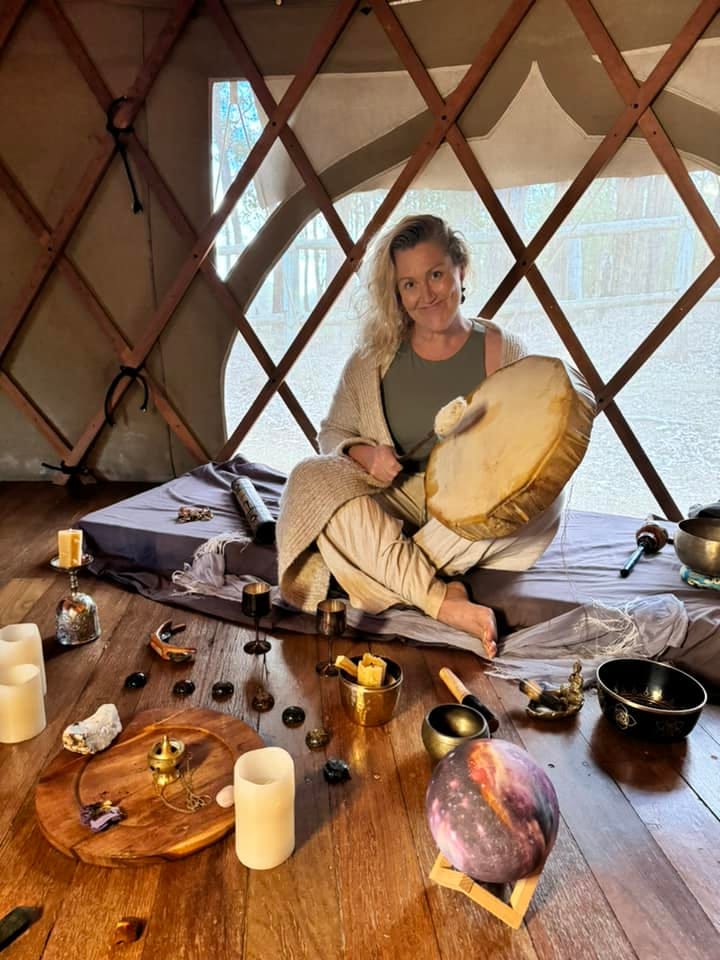
Fiona Ellis is the creator of the Archetypal Wounds Oracle Deck and founder of Archetypal Integration. A Master Trainer of Shamanic NLP with over 15 years of experience, she maps the inherited trauma patterns that shape our relationships, identity, and sense of worth — bridging archetypal psychology, cultural trauma theory, and somatic integration to help people heal what their lineage could not.
A 68-card oracle system mapping the inherited trauma patterns that shape your life, relationships, and sense of worth. Created by Fiona Ellis — Master Trainer of Shamanic NLP and founder of Archetypal Integration.
Every card in this deck maps a pattern passed down through your lineage — not as personal failure, but as generational inheritance. The healing starts when the wound is witnessed.
Get the Oracle Deck