The Mother Wound Archetypal Wound: The Unmothered Child
The Mother Wound Archetypal Wound: The Unmothered Child
The Inheritance That Made Your Needs Feel Like Too Much
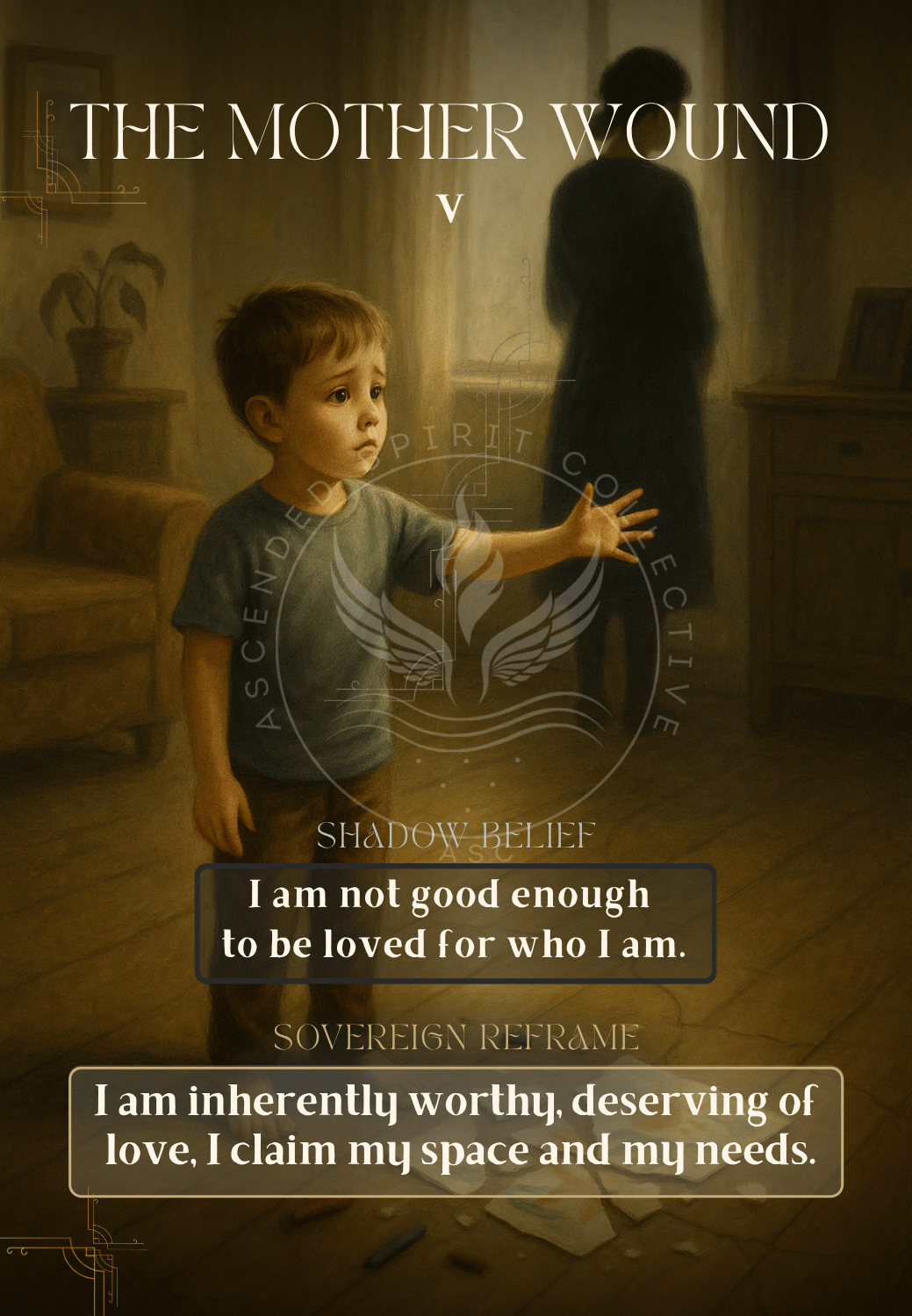
The Shadow Belief
“I shouldn’t need so much. If I were whole, I wouldn’t crave what I never got. My needs are too much.”
There is a wound that aches in the space between what you needed and what you received. It is not always dramatic. Sometimes it is simply the quiet absence of being truly seen, truly held, truly mothered. And the shame you carry for still wanting it — years, decades, a lifetime later.
This is the Mother Wound Archetypal Wound. And if you have ever over-functioned to prove your worth, mothered everyone around you while starving for care yourself, or felt ashamed of your own hunger for love — you are carrying it.
Where This Archetypal Wound Was Born
This Archetypal Wound arises from the cultural fracture where feminine energy was devalued, emotional nourishment became taboo, and dependency was framed as weakness. Across patriarchal and industrial eras, mothering was idealised but unsupported — many mothers were emotionally absent, unavailable, or taught to suppress affection for survival. They could not give what they themselves had never received.
The Victorian Shame Wound taught us to hide emotions. The Industrial Productivity Wound forced caregivers into overwork and depletion. The Polarity Collapse Wound told us we should not need anyone at all. This fracture birthed a generation of individuals who blamed themselves for the mother’s emptiness and continued the cycle of self-abandonment in the name of love.
This wound does not only live in those raised by absent mothers. It lives in anyone who learned that their emotional needs were an inconvenience. Anyone who was told, directly or indirectly, that they should need less, ask for less, take up less space. Anyone who received the message that love was something you earned through performance, not something you deserved by existing.
How This Archetypal Wound Manifests Today
You might recognise the Mother Wound in overfunctioning to prove worth — being the one who holds everything together so that no one can accuse you of needing too much. Mothering others to earn love, unconsciously recreating the dynamic where you give endlessly and receive nothing. Feeling ashamed of needing care, as though your emotional hunger is a character defect rather than a natural human requirement.
It manifests as deep mistrust of feminine energy, resentment toward emotionally absent caregivers, rejection sensitivity and emotional shutdown, and self-abandonment as a form of loyalty. This wound often drives you to become the caretaker of everyone around you — filling the role you wished someone had filled for you. But the giving becomes a defence against receiving, because receiving means admitting the ache.
And admitting the ache means confronting the truth: it was not your fault. You did not cause the emptiness. And it was never your role to fill it. Your mother’s absence was her wound — not your failing. Her inability to nurture was shaped by the same cultural forces that shaped you.
The healing is not to stop caring for others. It is to stop starving yourself in the process. To honour your unmet needs without shame. To let yourself be mothered now — by the Earth, by Spirit, by your ancestors, or by your own adult self. Reclaim the sacred act of receiving. Let yourself be nourished without needing to earn it first.
The Sovereign Reframe
“I was always worthy of being mothered. My needs are sacred. The absence was never my fault.”
Journal Prompts for Integration
▸ What if my need for love was never the problem — but my shame around it was?
▸ Where am I still mothering others to avoid facing my own hunger for care?
▸ What would it feel like to receive — truly receive — without needing to earn it first?
Go Deeper With the Full Healing Toolkit
This article introduces the wound. The Archetypal Wounds Oracle Deck gives you the complete toolkit to heal it — including a personalised EFT Tapping Script, ACT Integration Process, Mirror Mantra, and guided Journal Prompts for every single archetype.
Get your deck at archetypalwounds.com
Support this work: ko-fi.com/fionaellis
Research Disclaimer: This article draws on cultural history, epigenetic research, and archetypal psychology. It is intended for education and self-reflection, not as a substitute for professional mental health support. The Archetypal Wounds Oracle Deck was created by Fiona Ellis and informed by AI-assisted research. If you are experiencing a mental health crisis, please contact a qualified professional.
© 2026 Fiona Ellis | archetypalintegration.com
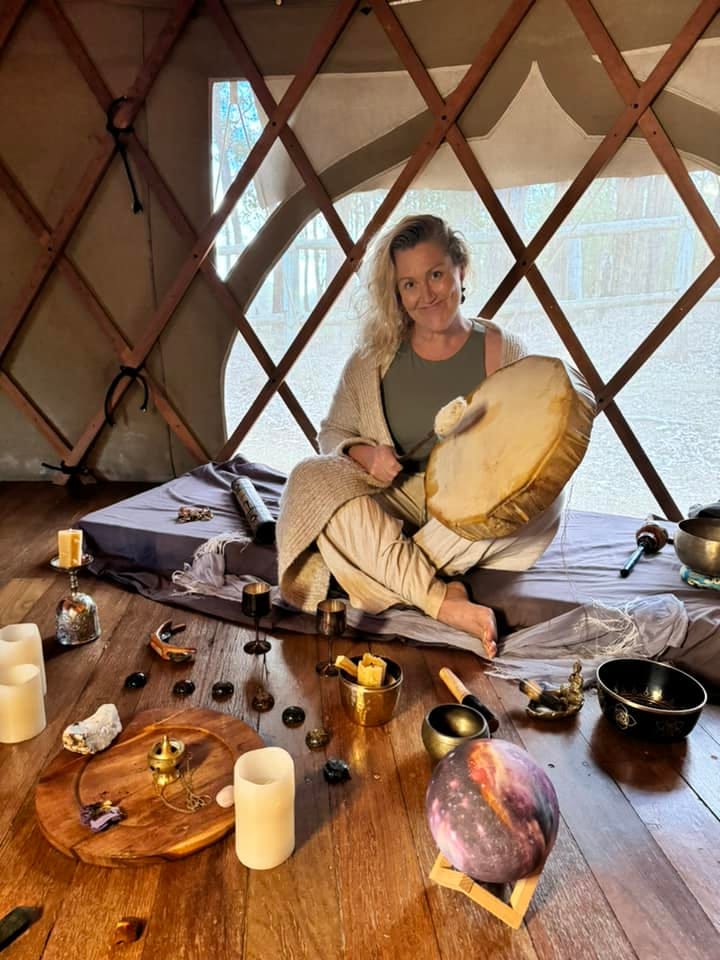
Fiona Ellis is the creator of the Archetypal Wounds Oracle Deck and founder of Archetypal Integration. A Master Trainer of Shamanic NLP with over 15 years of experience, she maps the inherited trauma patterns that shape our relationships, identity, and sense of worth — bridging archetypal psychology, cultural trauma theory, and somatic integration to help people heal what their lineage could not.
A 68-card oracle system mapping the inherited trauma patterns that shape your life, relationships, and sense of worth. Created by Fiona Ellis — Master Trainer of Shamanic NLP and founder of Archetypal Integration.
Every card in this deck maps a pattern passed down through your lineage — not as personal failure, but as generational inheritance. The healing starts when the wound is witnessed.
Get the Oracle Deck