The Polarity Collapse
Archetypal Wounds™ Framework — Core Wound III
The Polarity Collapse:
Why Modern Relationships Are Failing
By Fiona Ellis — Creator of the Archetypal Wounds™ Framework
"What was meant to free us became another prison — independence without intimacy, strength without softness, leadership without reciprocity."
Here's a question nobody wants to ask out loud.
Why are the most successful, intelligent, emotionally aware people you know — the ones who have done the therapy, read the books, sat in the ceremonies — still struggling in love? Still choosing unavailable partners? Still oscillating between fierce independence and a deep, quiet longing for connection they can't seem to let in?
It's not a personal failing. It's not your attachment style. It's not even your childhood — at least, not only your childhood.
It's a cultural wound. And everyone alive today is carrying it.
Within the Archetypal Wounds™ framework — a lineage-based shadow work methodology developed by Fiona Ellis — this is called the Feminism & Polarity Collapse Wound. It is the third of three Core Global Wounds that shape every inherited pattern we carry. And it may be the one doing the most damage to your relationships right now.
What Actually Happened
When the world shifted — through technology, war, birth control, economic change, and social revolution — the ancient dance between masculine and feminine polarities fractured.
Women no longer needed a man to survive materially. Men no longer had exclusive access to provision, protection, or purpose. The roles that once secured partnership began to dissolve.
And here's the part nobody talks about: the world did not replace those roles with new ones. It simply shamed the old ones and glorified independence at any cost.
What began as liberation slowly became division.
The Messages We Inherited
This is not about blaming feminism. Feminism was necessary. The right to vote, to own property, to work, to leave — these were essential corrections to centuries of oppression.
But something else happened alongside the liberation. Something that went unaddressed. A complete polarity reversal — where the pendulum didn't land in the centre. It swung to the other extreme.
Women were handed a new set of survival rules:
"Don't need anyone."
"Dependence is weak."
"Take care of yourself."
Men received a different set:
"You're no longer necessary."
"Your masculinity is dangerous."
"Tone it down."
The cultural story fractured into two extremes. Women internalised: "I must be both feminine and masculine to survive." Men internalised: "I am no longer needed, safe, or welcome."
Both lost access to their full polarity.
The feminine became self-sufficient but exhausted. The masculine became passive, apologetic, or aggressive. And harmony — the thing that makes relationships actually work — collapsed.
This wound explains the modern relationship crisis. Not your last breakup. Not your dating app fatigue. The entire crisis.
What Your Nervous System Learned
This isn't theory. It lives in your body. Your nervous system — shaped by generations of this wound passing through your lineage — learned to equate closeness with danger, intimacy with loss of self, dependence with shame, leadership with oppression, vulnerability with weakness.
And it shows up in ways you've probably been calling "my pattern" without understanding where the pattern actually came from.
You might recognise it as:
Difficulty receiving support — even when you're drowning.
Choosing partners you don't actually trust to lead.
Feeling unsafe softening or opening, even with someone safe.
Men shrinking themselves to avoid being "too much."
Women carrying the emotional and logistical load alone — then resenting it.
Hyper-independence worn like armour when it's actually a trauma response.
Longing for deep connection while simultaneously fearing it.
The Archetypes It Creates
Within the Archetypal Wounds™ system, the Polarity Collapse wound generates some of the most recognisable — and most painful — archetypes in the entire 68-card deck. These are patterns you've probably lived in without having language for them.
The Battling Beauty — the woman who armoured her femininity because softness felt dangerous. She's commanding but closed. Respected but restless. She carries her crown like a weapon, not a birthright. She confuses conquering with co-creating and is exhausted from over-functioning but terrified to rest.
The Unclaimed Queen — successful, sovereign, powerful, and alone. Not because she's "too much" but because the wound tells her that power and love can't coexist. She's a queen without a king — not because kings don't exist, but because letting one in would mean putting down walls she built to survive.
The Failed Provider — the man who equates his worth with his pay cheque. If he can't provide materially, he believes he isn't a man. In relationships, it shows up as resentment, withdrawal, or shame — especially when his partner earns more or doesn't need his money. The wound whispers: "If she doesn't need me financially, why would she want me?"
The Unneeded Knight — the man addicted to rescuing because that's the only place he knows his role. He's drawn to chaos because it activates his hero archetype. But when love is calm and his partner is whole, he feels lost. He chooses dysfunctional partners he can save and mistakes trauma bonds for chemistry — because sovereign love doesn't activate the wound he's built his identity around.
The Shamed Man — the man who learned that his masculinity itself is the problem. He was told to be more sensitive, but not too emotional. Strong, but not threatening. Present, but not dominant. He carries shame not for something he did, but for something he is. And that shame either collapses him into passivity or forces him into aggressive overcompensation. Neither is integration.
This Wound Is Not About Blame
This is important. The Polarity Collapse wound is not anti-feminist. It's not anti-masculine. It doesn't suggest we go back to the 1950s or undo the progress that was fought for. The Archetypal Wounds™ framework doesn't take sides. It maps what happened, traces how it was inherited, and creates a pathway to integration.
The wound is named "Women vs Men" because that IS the fracture. The polarity collapsed into opposition — competition instead of collaboration, suspicion instead of trust, independence instead of interdependence.
The collective trauma script running underneath all of this is: "Don't trust the opposite polarity. Do everything yourself. Protect yourself. Expect loss."
That script is not yours. You inherited it. And you can stop passing it forward.
The Integration Path
Healing begins when masculine and feminine stop battling and start remembering each other.
Integration is not a return to outdated roles. It's a return to polarity as a living dance, not a war. It's strength with softness. Leadership with receptivity. Devotion with boundaries. Independence with interdependence. Clarity with compassion.
It starts with asking yourself honest questions:
Where did I learn that relying on someone was dangerous?
What do I fear will happen if I soften or open?
What do I fear will happen if I lead or take charge?
How have I been protecting myself from the very connection I want?
What becomes possible when masculine and feminine can coexist — in me?
Because this wound doesn't only live between you and a partner. It lives between the masculine and feminine inside you. Every person carries both. And when the internal polarity collapses — when you shame your own softness or suppress your own strength — relationships on the outside become a mirror of the war happening within.
A Practice to Begin
Place one hand on your heart — this is your feminine energy. Place the other hand on your spine — this is your masculine energy.
Breathe until both hands feel equally alive. Not one dominating the other. Not one dismissed so the other can function.
Feel the reunion begin.
The Polarity Collapse is one of three Core Global Wounds mapped within the Archetypal Wounds™ framework, alongside the Victorian Era Wound (Spirit vs Body) and the Industrial Factory Wound (Being vs Doing). Together, they shape the 60 archetypal patterns carried through your lineage — patterns that aren't personal failures but inherited survival strategies.
Seeing the pattern is the first step. Naming it gives you power over it. And integration — not fixing, not shaming, but witnessing and integrating — is what breaks the cycle. For you, and for the seven generations that follow.
Discover Your Archetypal Patterns
The Archetypal Wounds Oracle Deck maps 68 inherited patterns across three Core Global Wounds. Each card includes shadow beliefs, sovereign reframes, wound origins, and four integration practices to help you see the mask — and begin to take it off.
Explore the Oracle DeckArchetypal Wounds™ is a lineage-based shadow work framework developed by Fiona Ellis, mapping 68 inherited trauma patterns across three core cultural wounds. Learn more at archetypalwounds.com | archetypalintegration.com
© Fiona Ellis 2026. All Rights Reserved. Archetypal Wounds™ is a proprietary healing and archetypal transformation system. No part of this content may be reproduced without prior written permission.
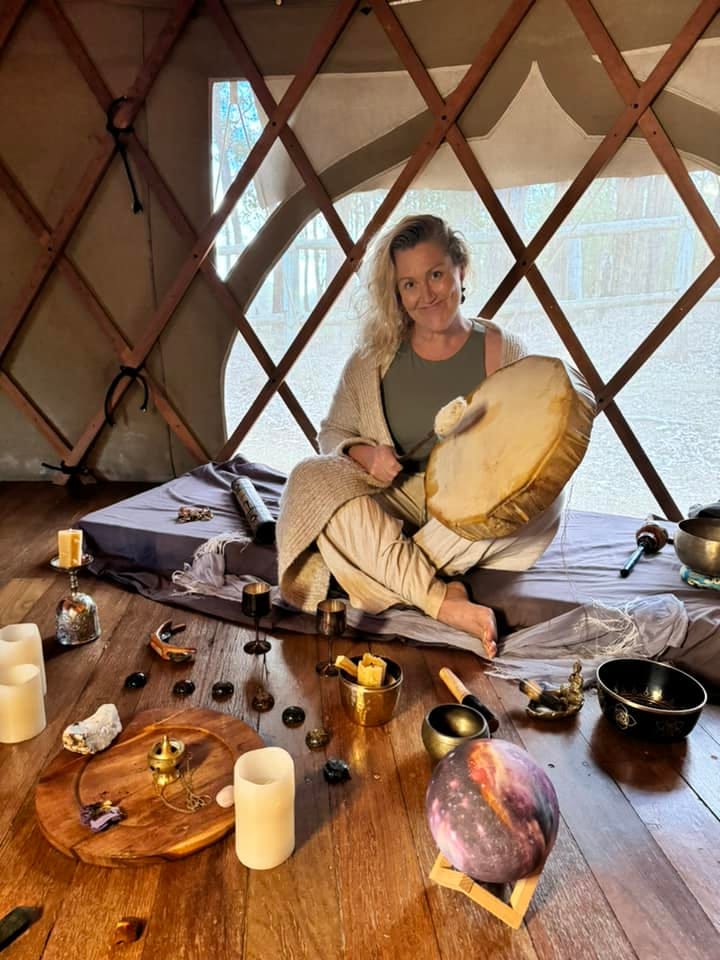
Fiona Ellis is the creator of the Archetypal Wounds Oracle Deck and founder of Archetypal Integration. A Master Trainer of Shamanic NLP with over 15 years of experience, she maps the inherited trauma patterns that shape our relationships, identity, and sense of worth — bridging archetypal psychology, cultural trauma theory, and somatic integration to help people heal what their lineage could not.
A 68-card oracle system mapping the inherited trauma patterns that shape your life, relationships, and sense of worth. Created by Fiona Ellis — Master Trainer of Shamanic NLP and founder of Archetypal Integration.
Every card in this deck maps a pattern passed down through your lineage — not as personal failure, but as generational inheritance. The healing starts when the wound is witnessed.
Get the Oracle Deck